Every IT services firm promises certified engineers, proactive monitoring and 24/7 support, so buyers default to price or to whoever they already use. Published technical expertise is how you stop being a line-item comparison.
Free, back in 48 hours. No sales call to get it.
When every proposal lists the same certifications and SLAs, procurement has nothing to judge but the number at the bottom. Depth you can't demonstrate publicly is depth that doesn't count.
They're not shopping, and they won't be for two or three years. Cold outreach into those accounts fails, but sustained visibility means you're the one they call when the contract finally cracks.
The real expertise sits with engineers and architects who have no interest in publishing. So it stays internal, and the marketing sounds like it was written by someone who's never touched the stack.
It works until it doesn't scale. There's no motion generating demand independently of who the founder happens to know.
24/7 support, certified engineers, proactive monitoring, trusted partner. It's the entire category's homepage, and it gives a buyer no reason to prefer you.
A specific operational outcome plus a genuine position on where IT is heading: cloud cost discipline, security posture, AI operations, consolidation. Buyers choose the firm that seems to know what's coming, not the one with the longest certification list.
We map what competing providers in your market claim and where the category over-promises, then build pillars around the problems your team actually solves better.
Economic buyer and the one carrying the risk of a switch. They read to reduce that risk, which is exactly what consistent published thinking does.
Technical validator. They'll spot a marketing claim instantly and they'll respect real depth. Content written with actual engineering substance is what earns this person.
Present on any material managed contract. They need the cost and risk case, not the tech stack.
Increasingly in the path on every deal. Published expertise on posture and process is often the fastest way to get comfortable early.
Monthly sessions with your architects, engineers, and service leads. They talk, we write. Nobody on your technical team has to draft anything.
The problems you keep resolving, the misconfigurations you keep finding, the decisions clients keep getting wrong. This is credible, specific, useful content, and it's already happening every day.
Where the market is going, what the consolidation wave means for buyers, and what you'd do differently. This is the layer that separates a provider from a vendor.
How prospects describe the pain of their current provider, in their words, which is far more persuasive than describing your capabilities.
In IT services the expansion opportunity inside current accounts usually outweighs new logo pipeline, and your clients are the warmest audience you'll ever address. Additional service lines get sold here first.
These are a long game, and that's the point. Sustained authority keeps you present through a multi-year replacement cycle, so you're the obvious call when a contract fails or an outage forces a review. Cold outreach cannot do this. Consistent published expertise can.
We build the target list from real signal by geography, size and vertical, and route the accounts LinkedIn can't reach efficiently to programmatic, Facebook or email so nothing on the list goes dark.
Posts that land organically become thought-leader ads, and every engager, named site visitor and ad engager flows into email and LinkedIn plays. Warm audiences convert in the $75-150 range across the accounts we manage, versus $300-600+ cold.
Real expertise goes in. A governed knowledge base holds your voice, positioning and proof, and the five foundational documents that run it. Sharp, on-brand assets come out, everywhere.
We get to know your brand, offering and competitor landscape, find the gaps and where your UVP wins, land your core messaging pillars, then map the messaging to your audiences and funnel stages. Nine milestones, three phases, about 4 to 6 weeks. Shared ownership: when a step slips, every downstream step shifts with it.
Notes, voice memos, a short prompt or guide, or pillar questions.
A full month built in your voice, ready to publish.
Edits, swaps, sequencing, then load to schedule.
First post publishes. The monthly cycle begins.
Where timelines slip: Phase 1 moves at the speed of your turnaround. Block 30 minutes per feedback round and we hold the 4-6 week window.
Founder and expert-led thought leadership is where it begins, and the layer that keeps compounding to category leadership. Find your stage, and we'll tell you what to lead with.
Message-market fit. First conversions.
Attribution proven. Scaling begins.
Demand gen for out-of-market buyers.
Multi-channel at scale. Predictable pipeline.
Optimized economics. Brand compounds.
Roughly: owner-led selling sits at Validate, a repeatable service package at Ramp, a real marketing motion at Reach, multi-market or multi-vertical at Supply, and regional category authority at Sustain. PE-backed roll-ups usually enter at Reach.
Start where your voice is, then climb when it's earning. The combo is where most teams end up, because organic tells you which message works before you pay to scale it.
The combo. Test the messaging organically, amplify the winners as thought-leader ads, then harvest the signals the motion throws off, organic engagement, website visitors, and ad engagement, and flow them into email and LinkedIn connect and message plays. Full-funnel value out of every post.
Run the combo →A consistent founder voice on LinkedIn, from your real POV.
Strategy, inputs and multi-format content, ready to amplify.
The full brand brain, powering sharp assets across every channel, organic and paid.
Brand Engine output volumes are a representative monthly scope and flex to your priorities.
Own the voice extraction process, skill architecture, setup, documentation and training. Run it internally for any number of executives or partners.
A second voice on the same infrastructure. Add a partner or practice lead.
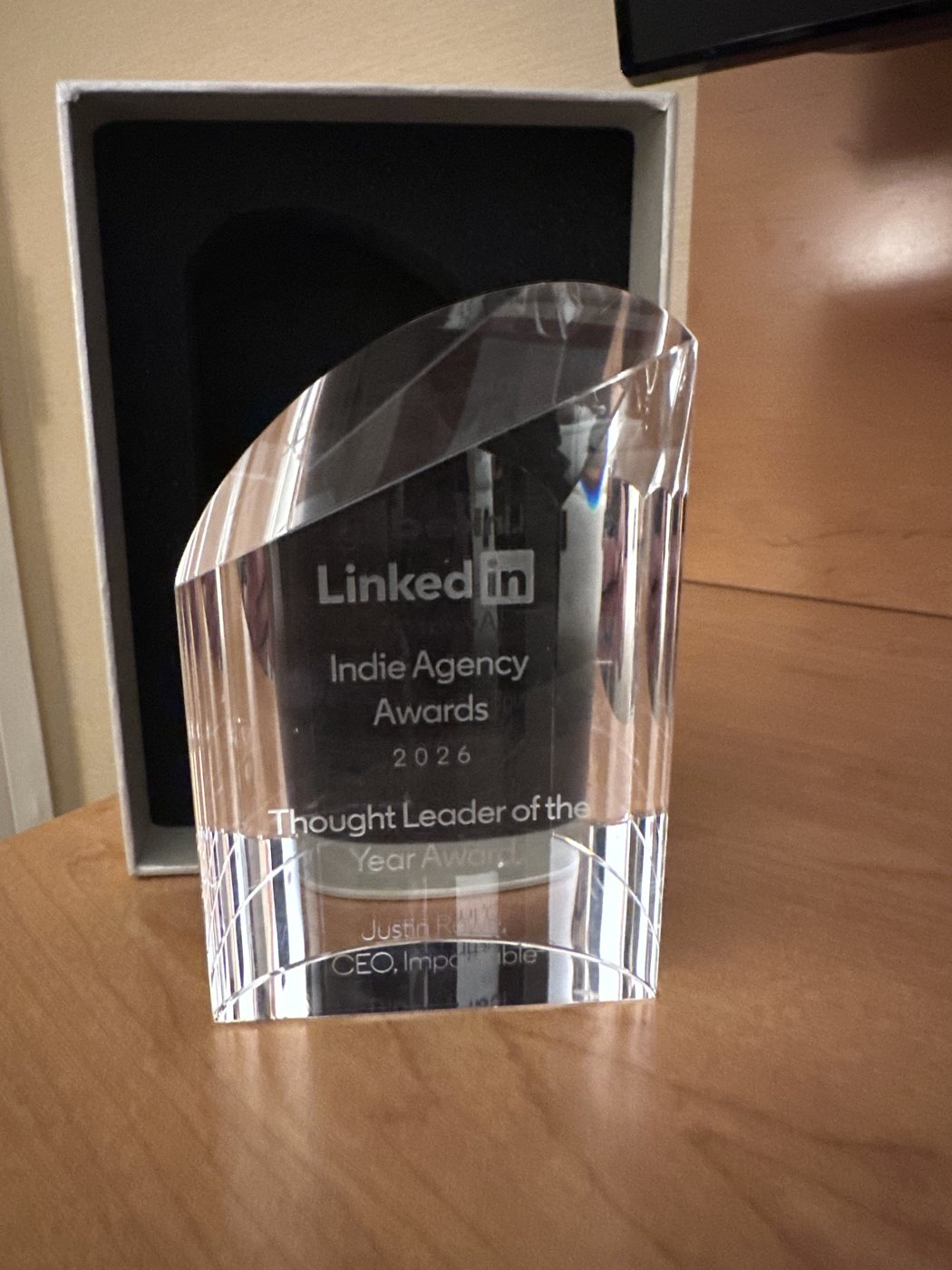
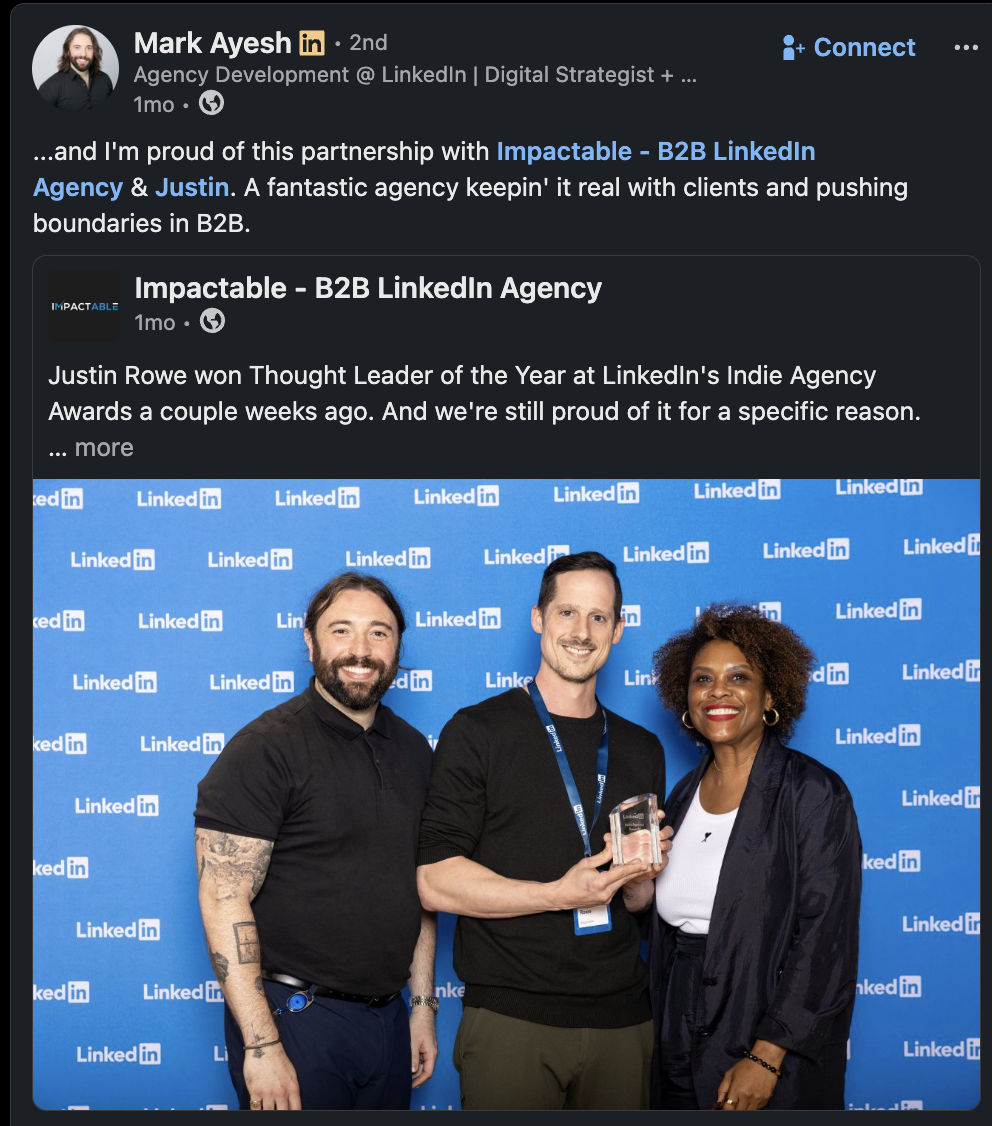
We sit on both sides of the LinkedIn relationship. On the paid side, we're a certified LinkedIn Marketing Partner. On the organic side, LinkedIn named our founder Thought Leader of the Year at the 2026 Indie Agency Awards. Paid and organic aren't two teams, they're one engine, and LinkedIn recognizes both halves.
An agency partner on the ads side, with the platform access, betas and rep coverage that come with it.
Named by LinkedIn at the Indie Agency Awards. Not a self-declared title. The platform itself called it.


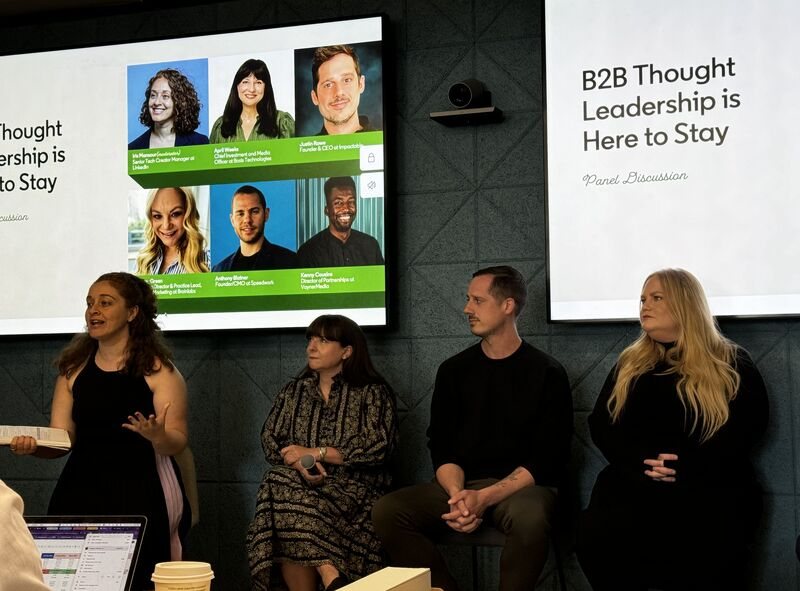
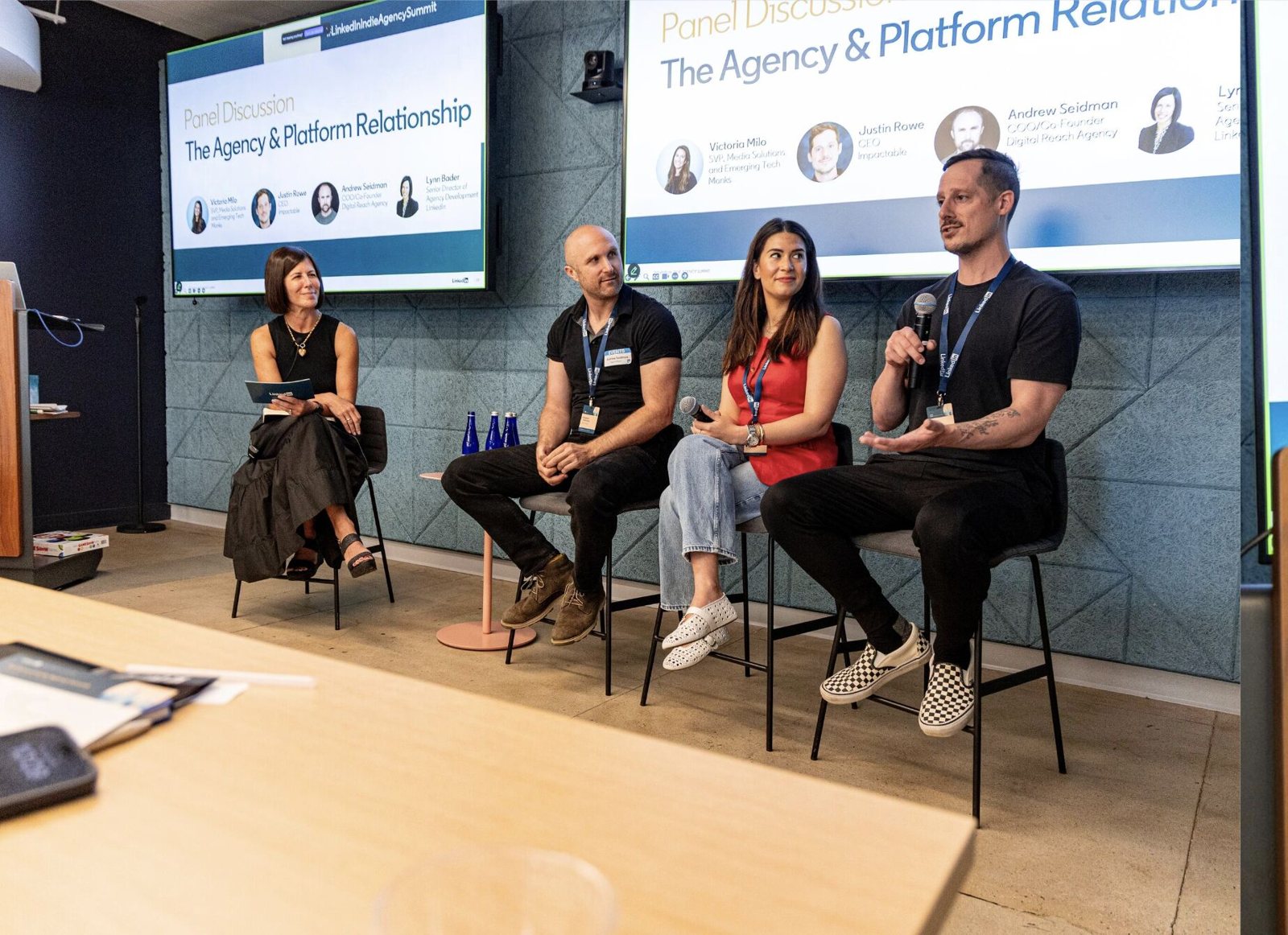
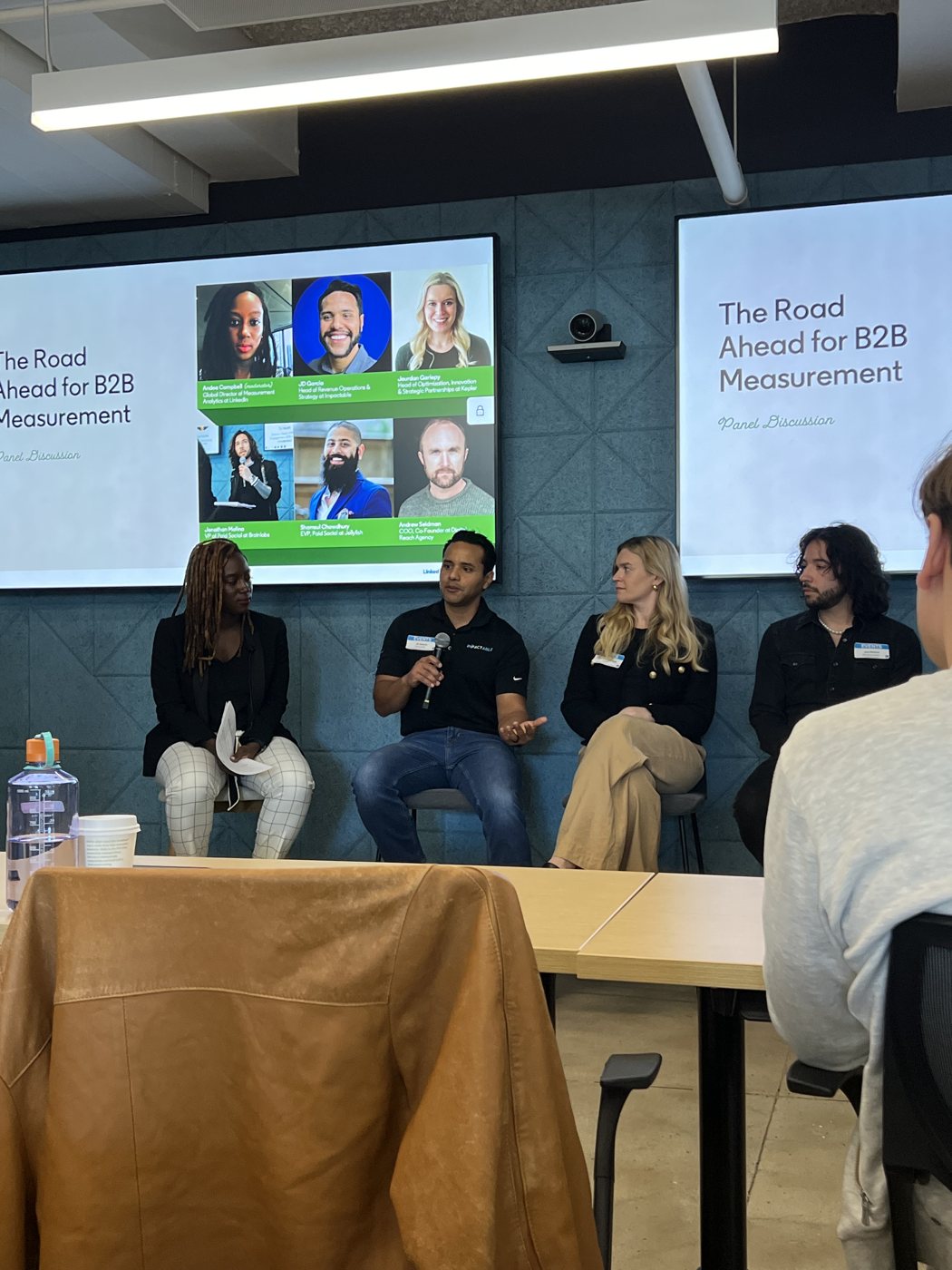
On stage at LinkedIn's Independent Agency Summits, New York
DemandSense composes five signal sources, from your CRM to your LinkedIn paid and organic engagement to the companies and people identified on your site, into one account-level view: who is engaging with your content, from what company, in what role, and how close they are to a decision. It's what turns authority into a named list your sales team can act on. No competitor connects these dots.
The only LinkedIn ads agency we recommend to our clients. You do that incredibly well.
Everyone else had to beat what I'd already seen from them in organic content. I let the agency lead and I've been thrilled.
You changed the LinkedIn ads game for so many businesses, as clients, or with the content you share for free.
A governed knowledge base loaded with your voice, positioning, proof, frameworks and ICP, run by five foundational documents. It knows your brand better than anyone and produces sharp, on-brand assets across every channel, organic and paid.
Typically 4 to 6 weeks across three phases: voice calibration, first batch, approve and launch. The timeline depends on your turnaround on the intake form, calibration feedback and Month 1 inputs.
Directly. We test messages organically, amplify the winners as thought-leader ads across LinkedIn, YouTube and Facebook, then harvest the signals: organic engagement, named website visitors and ad engagement. Those flow into email and LinkedIn connect and message plays that feed the whole funnel.
That's the strongest argument for it. You can't outbound your way into an account that isn't shopping, but you can be the firm they've been reading for two years when the contract finally comes up. Content is the only channel that stays economical over a cycle that long.
Your team never writes. We interview them, then produce the assets and route everything back for a technical review pass before it publishes. Nothing goes out that your engineers haven't approved, which is what keeps it credible to the buyer's technical validator.
The team behind Lacework's 6X, published by LinkedIn, and named LinkedIn's Thought Leader of the Year for 2026.